
Manipulatives in Early Childhood - and why we bring them to the music class.
Music sparks joy.
Music builds skills.
Music connects us all.
If you’ve ever watched a young child sort coloured blocks, thread beads onto a string, or build a stacking toy with pure delight, you’ve witnessed manipulatives in action. These hands-on objects are a cornerstone of early childhood education… and for very good reason!

What are manipulatives?
In early childhood settings, manipulatives are physical objects children use to explore, experiment, and make sense of the world around them. Think counting bears, puzzle pieces, playdough, and building blocks. Rather than absorbing information passively, children engage actively: touching, moving, and manipulating objects to construct their own understanding.
Research consistently shows that hands-on, sensory-rich learning supports cognitive development, fine motor skills, concentration, and problem-solving. When children can feel a concept, they understand it far more deeply than when it’s simply shown to them on a screen or explained in words.
We love manipulatives in music class!
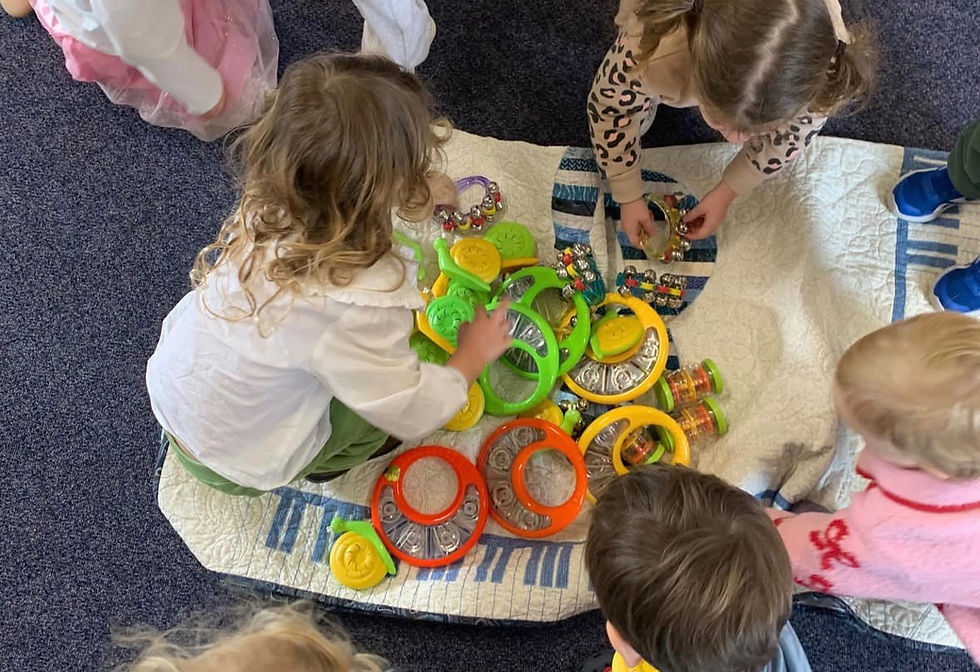
Music and hands-on play are a natural pairing - parents and teachers expect us to bring percussion instruments to classes… but many are surprised by all the other extra props and ‘stuff’!
In our early childhood music classes, manipulatives take centre stage.
When a child shakes an egg shaker, they’re not just making noise. They’re developing a sense of rhythm, building hand strength, and experiencing cause and effect. When they wave a colourful scarf to the rise and fall of a melody, they’re connecting movement to sound, linking emotion to expression. When they tap a drum softly and then loudly with their wooden mallets, they’re discovering dynamics (louds/softs in music)… all through physical experience.
Manipulatives in music class also offer the opportunity to regulate. The repetitive motion of shaking, tapping, or swaying alongside music is calming for the developing nervous system. For many children, this sensory feedback provides a sense of grounding and security that supports emotional wellbeing alongside musical learning.
Use of manipulatives also demand imagination. The music plays, the object is in their hands, and the experience becomes entirely their own.
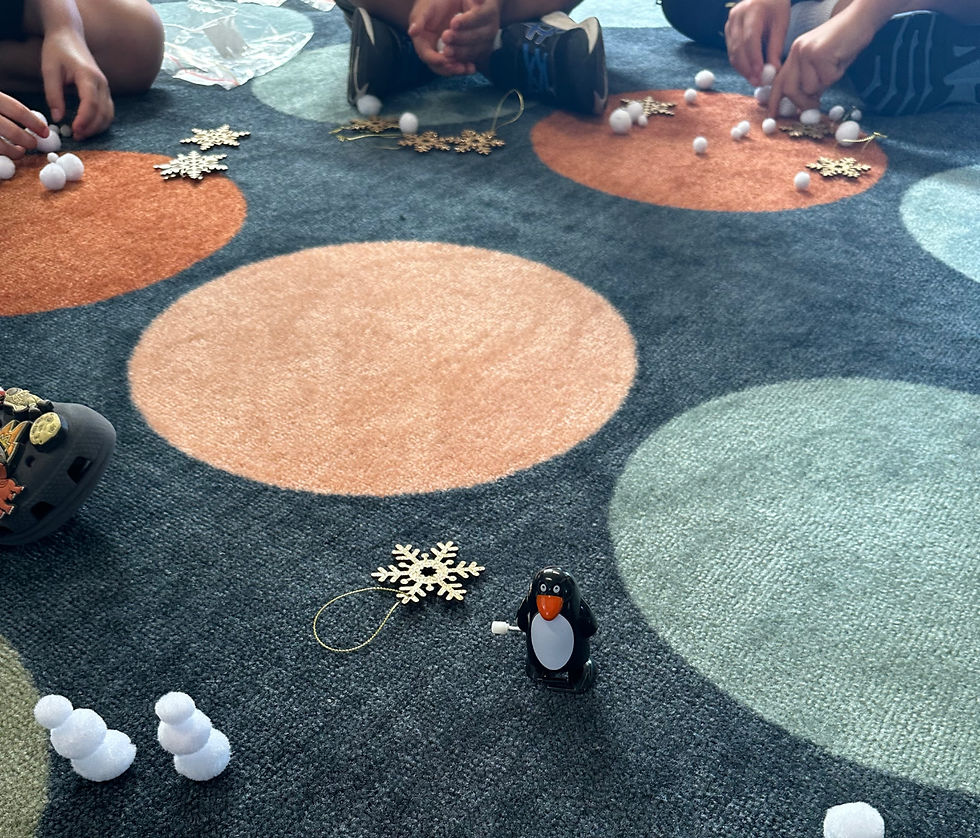
Learning through the whole body
The early years are a window of extraordinary brain development. Children in this stage learn most powerfully through movement, touch, and sensory exploration — not sitting still and watching. Bringing manipulatives to the music class honours the way young children are wired to learn, making every class a multisensory experience that goes far beyond just the sounds and songs.
Zene Music Perth is more than a few music games for fun
Zene Music is a refined music program and a partner in early childhood development, delivered by experts who are passionate about nurturing creativity and skills through music. They work closely with centres, playgroups, libraries, and schools in Perth and beyond to tailor sessions that fit each group’s needs. If you want to enrich your early childhood environment with music, Zene Music is a fantastic choice.


Comments